Records and responsibilities
Define customers, projects, orders or tasks, and the fields each role needs. Establish which record is the source of truth.
When the same quotation, approval or handover passes through several spreadsheets and chat threads, a small business system may help organise the work. OPSVORY scopes custom software development for Malaysian SMEs, starting with the decisions and records that need to be clearer.
A spreadsheet can be a good tool. Problems appear when different versions disagree, responsibility is unclear or a handover depends on remembering a conversation. We map those points before recommending a build.
Renovation teams managing enquiries and estimates, wholesalers revising B2B quotations, and service firms coordinating work across roles. A standard product may be more economical when it already fits the process; that comparison belongs in the scoping discussion.
Define customers, projects, orders or tasks, and the fields each role needs. Establish which record is the source of truth.
Specify stages, permitted actions, review steps and what happens when an item is rejected, revised or reassigned.
Plan numbering, line items, revision history and the information needed by the person receiving the next task.
Assess APIs, access, data quality and recurring charges. Reports should answer an operating question rather than duplicate a spreadsheet without purpose.
Prepare one real workflow example with sensitive details removed: who starts it, what information is recorded, who reviews it and where mistakes occur. Define the first useful phase, user permissions, hosting, backup and recovery needs, migration and acceptance criteria before development.
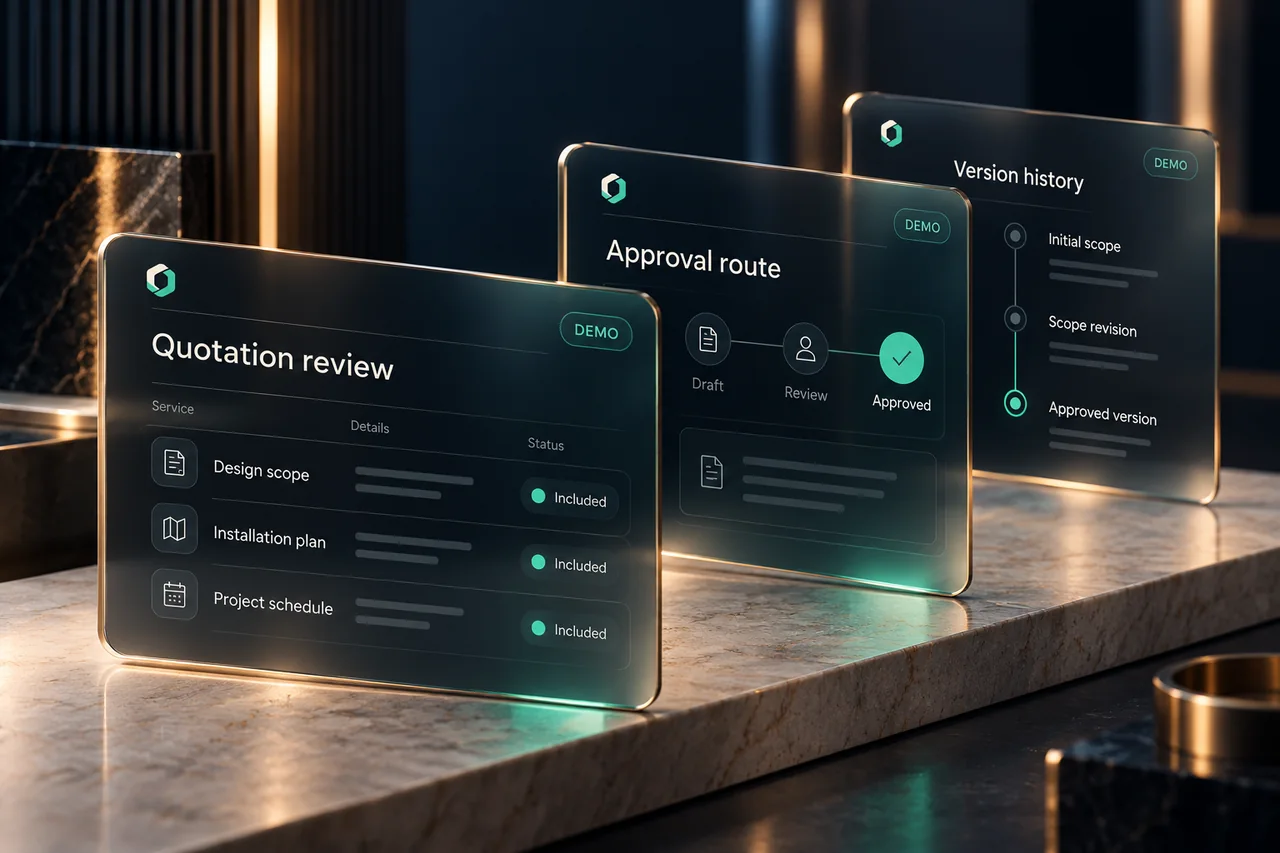
A wholesale enquiry can move from draft quotation to review, approved version and order handover. The first phase might focus only on these stages. Inventory, accounting and electronic invoicing are separate requirements and must not be assumed to be included.
Costs depend on workflow complexity, roles, integrations, migration, reliability requirements and support. We prepare a proposal after scope is clear, separating development from ongoing services.
Compare the actual workflow, total running cost, available integrations and the effort of maintaining a custom product. If an existing product meets the need cleanly, custom development may be unnecessary.
Such integrations require assessment of the relevant platform, permissions, specifications and responsibilities. No accounting, e-Invoice or regulatory compliance integration is implied by the demo.
Ownership, access, hosting responsibilities, handover and any maintenance arrangement should be explicit in the project agreement before work begins.
Share your industry, location, current tools and the task you want to improve. We will use that context to discuss a suitable first version.
Self-built demos use fictional records. Production security, shared data and integrations require an agreed project scope.