A business website
Confirm pages, languages, content responsibilities, photography, mobile layouts, CMS editing and the enquiry destination. Existing URLs and redirects matter when redesigning.
Website and software quotations are easier to compare when they describe the same work. This guide helps Malaysian SME owners prepare a useful brief for a website, app or CRM project. It is a scope checklist, not a price survey or fixed package offer.
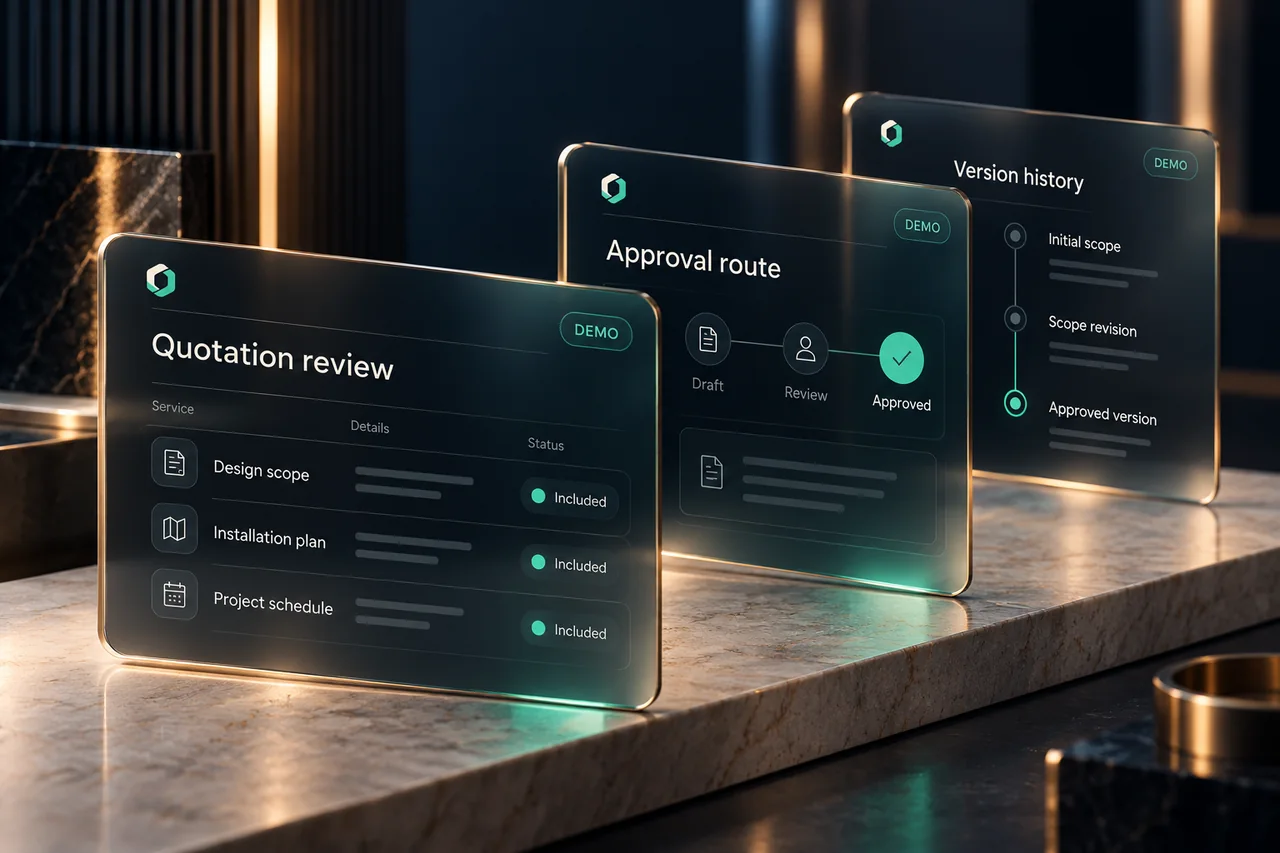
Two proposals can have very different prices because one includes copy, migration and handover while the other only covers a few screens. The first question is which users, tasks and deliverables each price actually covers.
Use this checklist before requesting proposals or comparing a subscription product with a custom build. A phased first version can keep the commitment clear, but later features still need estimates and agreed scope.
Confirm pages, languages, content responsibilities, photography, mobile layouts, CMS editing and the enquiry destination. Existing URLs and redirects matter when redesigning.
Specify user roles, records, workflow states, quotation rules, approvals, reports, data import and shared access. Define error handling and acceptance checks for important flows.
Clarify devices, browser or native access, sign-in, uploads, payments, offline needs and distribution. App-store requirements and ongoing releases may add work.
List domain, hosting, database, storage, monitoring, backups, API usage, subscriptions and support. State who owns each account and what happens at handover.
A practical brief includes: business and location; primary users and user count; the workflow that needs improvement; current tools; essential first-version features; integrations; content and languages; intended launch period; and a budget range. Remove private customer data from examples shared during an initial discussion.
For a renovation CRM, phase one might cover enquiries, a project pipeline, quotation revisions and follow-up dates. A shared production build also needs authentication, permissions, reliable storage and backups. Messaging, accounting and e-Invoice should be quoted separately if required.
No. This page does not claim measured market prices. OPSVORY prepares a quotation after the required scope and delivery responsibilities are understood.
Compare inclusions, acceptance criteria, account ownership, recurring charges, maintenance and handover. A lower number alone does not tell you whether the proposed system meets your needs.
Choose the single most valuable workflow, limit roles and integrations where practical, and identify what can remain manual for the first phase. Keep required security and reliability work in scope.
Deliverables, exclusions, milestones, responsibilities, acceptance criteria, ownership, hosting, support and change-request handling should be clear in the project agreement.
Share your industry, location, current tools and the task you want to improve. We will use that context to discuss a suitable first version.
Self-built demos use fictional records. Production security, shared data and integrations require an agreed project scope.